
At a Glance
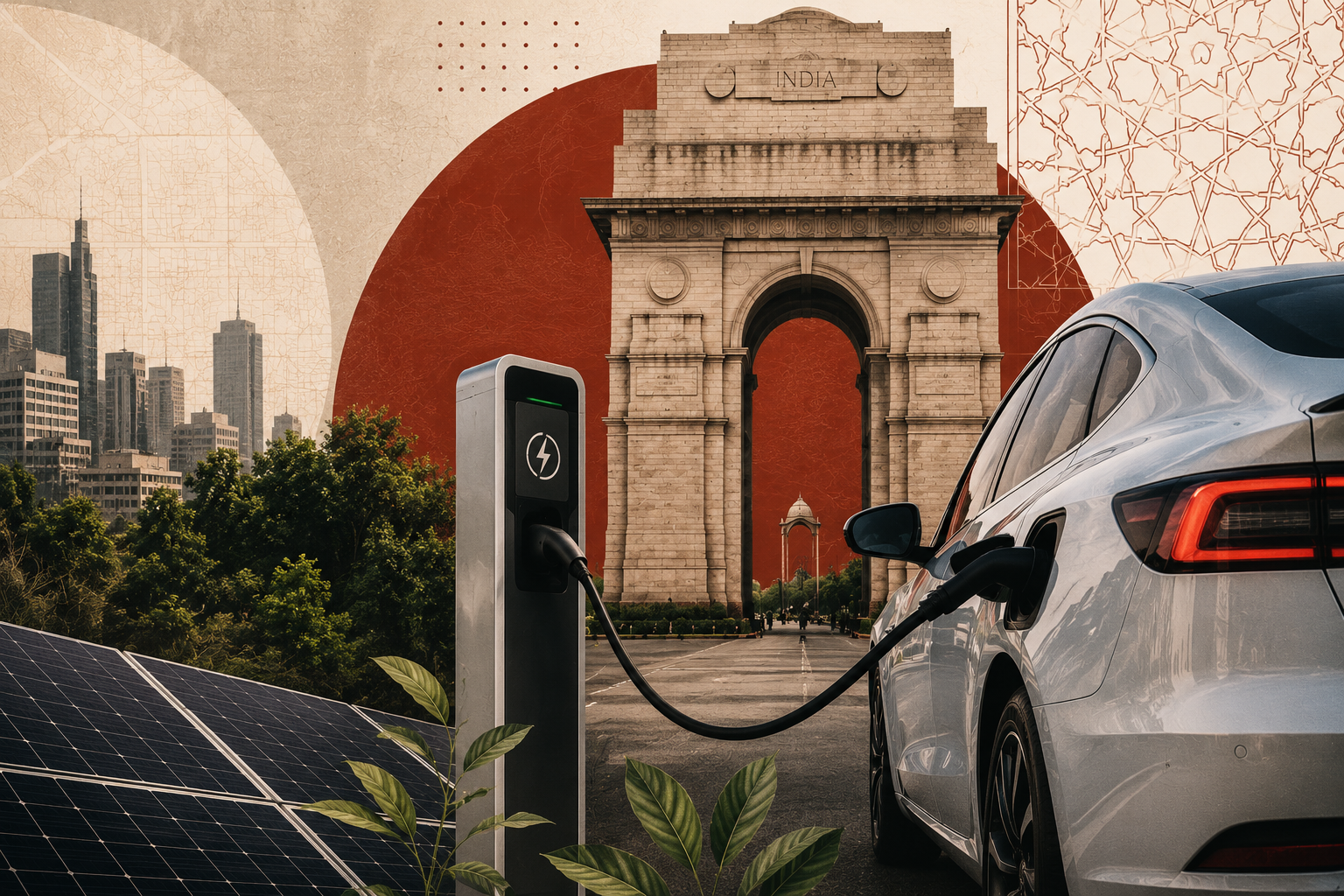
Delhi’s Electric Vehicle (EV) Policy 2026 marks a shift from encouraging voluntary EV adoption to actively reshaping consumer mobility choices. Through purchase incentives, scrappage benefits, tax exemptions, expanded charging infrastructure, and phased restrictions on new fossil-fuel vehicle registrations, the policy seeks to make electric vehicles more affordable, accessible, and socially accepted. Rather than focusing solely on environmental goals, the policy addresses the behavioural and economic factors that influence consumer decision-making, aiming to normalise electric mobility as part of everyday life. While challenges such as higher upfront costs and charging access remain, the policy represents one of India’s most ambitious efforts to accelerate the transition towards sustainable urban transportation.
Key Words: Delhi EV Policy 2026 · Electric Vehicles (EVs) · Behavioural Economics · Dr. Faiz Hasan
This is an autogenerated brief. Please read the entire article for context.
New technologies rarely succeed simply because they are better. If that were true, technological change would be far more straightforward than it is. Consumers routinely delay adopting products that promise lower costs, greater efficiency and long-term benefits. They hesitate, wait, observe others and often continue using familiar systems long after alternatives become available. Electric vehicles present precisely this puzzle. They are no longer an experimental technology. Battery performance has improved, charging networks continue to expand and manufacturers have invested heavily in electric mobility. Yet adoption remains uneven. Consumers who readily embrace new smartphones, payment apps and digital services often hesitate when confronted with the prospect of replacing a petrol vehicle with an electric one.
The hesitation reveals something important about technological change. New technologies succeed not when they become available but when they become ordinary. A petrol vehicle demands remarkably little thought. Drivers know where to refuel, how far they can travel and where to seek repairs. The system has become so familiar that it is almost invisible. Electric mobility, by contrast, still asks consumers to imagine a different set of routines. The question is not whether the technology works. The question is whether people are ready to reorganise everyday life around it. Therefore, the challenge is not merely technological. It is behavioural.
Seen in this light, the Delhi EV Policy 2026 can be read as an attempt to address this problem. Unlike the 2020 policy, which primarily encouraged voluntary adoption through subsidies, the 2026 policy works at two levels. At one level, the policy seeks to increase the adoption of electric vehicles through incentives, infrastructure development and regulatory measures. At another, it represents a broader effort to reshape how consumers think about mobility. Rather than treating electric vehicles as a niche alternative, the policy seeks to make them an increasingly normal part of everyday transport.
Lower Cost of EV Ownership
Cost remains one of the most visible barriers to adoption. Consumers purchasing battery electric vehicles (BEVs) continue to benefit from purchase incentives, while those scrapping eligible BS-IV and older Delhi-registered vehicles receive additional scrappage incentives. Furthermore, the policy offers a 100% exemption from road tax and registration charges, including electric cars with an ex-showroom price of up to ₹30 lakh.
Taken together, these measures significantly reduce the price gap between electric vehicles and their petrol or diesel counterparts. For many consumers, the transition to electric mobility begins not with environmental concerns but with the simple question of affordability. The policy recognises this reality and attempts to make the initial decision less financially daunting.
Strong Incentive for Early Buyers
One of the more distinctive features of the policy is its declining incentive structure. Purchase incentives reduce in successive years, meaning consumers who switch earlier receive greater financial benefits than those who postpone their purchase. This approach reflects an important aspect of consumer behaviour. Many individuals delay decisions even when they intend to act eventually. By reducing incentives over time, the policy introduces a cost to waiting and encourages consumers to make the transition sooner rather than later.
Greater Consumer Confidence Through Charging Infrastructure
Cost is only one source of hesitation. Consumers also need confidence that a new technology can fit comfortably into their daily routines. For electric vehicles, this concern often centres on charging. Delhi currently has over 10,000 public charging points, while the estimated requirement is around 36,000. To bridge this gap, the policy proposes installing 30,000 additional public charging points by 2030. Such an expansion is expected to reduce range anxiety, particularly among electric car owners and commercial fleet operators.
The importance of charging infrastructure extends beyond convenience. Technologies become easier to trust when the systems supporting them become more visible. Charging stations serve a practical purpose, but they also signal that electric mobility is no longer experimental. They suggest permanence, reliability and growing social acceptance.
For two-wheelers and three-wheelers, however, the situation is somewhat different. Nearly 85–90% of charging in these segments already takes place at homes, residential societies and fleet depots, where overnight charging is generally sufficient because of smaller battery sizes. As a result, consumers in these categories can adopt EVs with relatively little dependence on public charging infrastructure.
Improved Long-Term Savings
While purchase incentives often receive the most attention, the economics of ownership extend far beyond the initial transaction. Electricity remains substantially cheaper than petrol or diesel on a per-kilometre basis, while electric vehicles require less maintenance because they contain fewer moving mechanical components.
Over time, these savings can become significant, particularly for consumers with high daily travel requirements. Yet long-term savings are often less persuasive than immediate costs. Consumers experience the purchase price in a single moment, while operating savings accumulate gradually over years of ownership. The policy attempts to narrow this gap by reducing the initial financial burden while allowing the long-term advantages of EV ownership to become more visible.
Gradual Shift in Consumer Purchase Behaviour
Governments influence behaviour not only through incentives but also through the choices they make available. The Delhi EV Policy recognises this by introducing phased restrictions on the registration of certain fossil-fuel vehicles.
Beginning January 1, 2027, only electric autorickshaws will be eligible for new registration, while new petrol and CNG two-wheelers will no longer be registered from April 1, 2028. Consumers planning future purchases in these categories will increasingly encounter electric mobility as the expected option rather than an alternative one.
The significance of these measures lies not simply in regulation but in normalisation. Technologies often achieve widespread adoption when they cease to appear novel. By gradually changing the structure of available choices, the policy seeks to move electric mobility from the margins towards the centre of everyday transportation.
Better Options for Existing Vehicle Owners
Technological transitions are often easiest for first-time buyers and most difficult for those who have already invested in existing systems. Replacing a functioning vehicle involves financial, practical and psychological costs, even when the replacement promises long-term benefits.
The policy addresses this challenge by linking scrappage incentives with EV purchase subsidies. Consumers replacing BS-IV and older vehicles receive additional financial support, reducing the burden of upgrading to cleaner technology. At the same time, the requirement that subsidised vehicles remain registered in Delhi for a minimum lock-in period of three years seeks to ensure that these benefits are used for genuine adoption rather than short-term gain.
Cleaner Air and Better Public Health
The effects of transport policy are rarely confined to transport alone. Decisions about mobility shape the quality of the air people breathe, the health risks they face and the overall liveability of urban environments.
According to the Commission for Air Quality Management (CAQM), direct vehicular emissions contribute approximately 23% of Delhi’s winter PM2.5 pollution, while secondary particulate matter associated with transport contributes 27% during winter and 17% during summer. Increasing the share of electric vehicles is therefore expected to reduce local emissions and improve air quality across the city. For consumers, these benefits may appear less immediate than purchase incentives or fuel savings. Yet they ultimately affect aspects of life that are difficult to measure in monetary terms. Cleaner air, lower exposure to pollutants and improved public health are among the broader social outcomes that motivate the transition towards electric mobility.
Challenges That Consumers May Continue to Face
Despite its comprehensive approach, certain challenges remain. Electric four-wheelers continue to have higher upfront prices than comparable ICE vehicles, even after incentives. Consumers living in apartments without dedicated parking may still experience charging difficulties. In addition, the availability of electric models remains limited in some commercial and premium vehicle segments. As financial incentives decline over time, affordability could become a concern unless manufacturers achieve further reductions in production costs.
These challenges serve as a reminder that technological transitions rarely occur in a straight line. Policies can encourage adoption, but they cannot entirely remove uncertainty. Consumer confidence develops gradually, often through repeated exposure, social acceptance and everyday experience. The pace of adoption will therefore depend not only on incentives and regulations but also on how successfully these practical concerns are addressed.
Overall Consumer Impact
Delhi’s EV Policy 2026 has the potential to fundamentally transform consumer mobility choices. The city has already witnessed EV sales increase from 23,683 units in FY2020 to more than 107,465 units in FY2026, demonstrating growing consumer acceptance of electric mobility. With EVs accounting for 12.6% of all new vehicle sales in FY2026, the policy now seeks to accelerate this momentum towards an ambitious target of 95% of new vehicle registrations being electric by 2027 and around 30% EV share in the overall vehicle fleet by 2030. Viewed individually, the policy’s measures address different aspect of consumer decision-making. By combining financial incentives, scrappage benefits, charging infrastructure expansion, and phased regulatory mandates, the policy creates a strong economic and behavioural framework. However, taken together, they seem to pursue a larger objective: reducing the uncertainty that often accompanies technological change.
The history of innovation suggests that consumers rarely adopt new technologies simply because they are available. They adopt them when those technologies become affordable, reliable and sufficiently integrated into everyday life. Delhi’s EV Policy 2026 is significant not only because it promotes electric vehicles but because it seeks to accelerate that process of normalisation.
Whether the policy ultimately achieves its ambitious targets remains to be seen. What is already clear, however, is that the transition to electric mobility is no longer being framed solely as an environmental goal. It is increasingly becoming a question of how societies adapt to technological change and how governments attempt to guide that adaptation. In that sense, the policy offers a glimpse into a broader challenge that extends far beyond electric vehicles: the challenge of turning innovation into habit.
Read more:
JMK Research – Can Delhi’s New EV Policy Deliver 95% EV Registrations by 2027?
IEEFA – Feedback on the Draft Delhi Electric Vehicle (EV) Policy 2026 (PDF)
ThePrint – Delhi Government Notifies Delhi EV Policy 2026
The Times of India – Delhi EV Policy Keeps Hybrids Out, Includes Three-Year Lock-In Period
Hindustan Times – New EV Policy Will Help Long-Term Car Owners: CM Rekha Gupta
NDTV – Delhi EV Policy 2026 Cleared: No Hybrid Benefits, EV-Only Push
News on AIR – Delhi Begins Implementation of Electric Vehicle Policy 2026
The Hindu – EV Incentives to Apply Only to Approved Models Under Delhi Policy
ThePrint – Delhi Government Notifies Delhi EV Policy 2026

Dr. Faiz Hasan
Dr. Faiz Hasan is a marketing researcher, educator, and Case Study Manager at the Indian Institute of Foreign Trade (IIFT), New Delhi. He holds a PhD in Marketing from Aligarh Muslim University, with research focused on Electric Vehicle Adoption in India. His expertise includes consumer behaviour, digital marketing, sustainable marketing, and technology adoption. Alongside his academic role, he is associated with several companies as a marketing consultant, advising on marketing strategy, consumer insights, branding, business growth, and case study development. He has been associated with IIFT, IIM Lucknow, IIM Indore, MDI Gurgaon, and AMU, and has published in reputed journals while presenting his research at leading national and international conferences.