
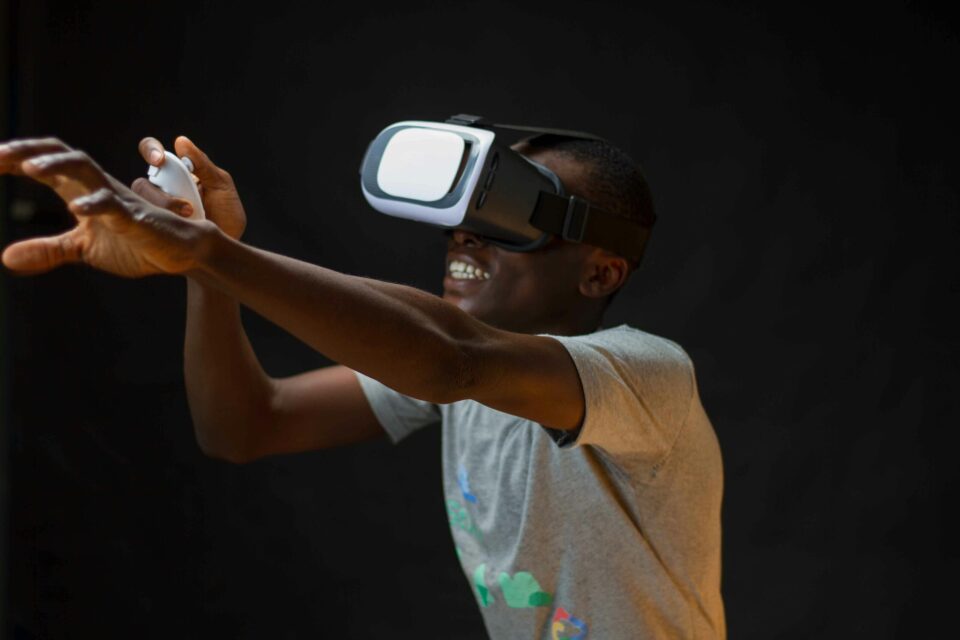
Modern technology has transformed how human beings communicate, work, and understand the world. Philosophers have increasingly asked whether technology simply serves human needs or whether it quietly reshapes the conditions of human existence itself.
Human beings have always relied on tools. From the earliest stone implements to the machines of the industrial age, technologies have expanded human capacities and altered the rhythms of daily life. Yet the technological systems of the modern world differ not merely in scale but also in their influence on human behaviour and social organisation.
Digital networks, algorithmic systems, and automated processes now structure many aspects of contemporary life.
These developments raise an important philosophical question. Does technology remain a neutral instrument that humans use to achieve their goals, or does it gradually influence the way individuals think, perceive, and act?
Philosophical reflections on technology often begin with this tension between human control and technological influence.
One of the most influential thinkers to examine this problem was Martin Heidegger. Heidegger argued that technology should not be understood simply as a collection of machines or tools. Instead, he suggested that technology represents a particular way of revealing the world.
According to Heidegger, modern technological thinking tends to interpret nature and human activity in terms of efficiency, control, and optimisation. Forests become resources to be managed, rivers become sources of energy, and even human labour becomes part of a system of production.
In this sense, technology shapes not only what we do but also how we interpret reality.
Heidegger did not argue that technology itself is inherently destructive. Rather, he warned that when technological thinking becomes dominant, other ways of understanding the world may be overlooked. Poetry, art, and philosophical reflection offer alternative ways of encountering reality that cannot be reduced to efficiency or calculation.
Technology and Human Activity
The relationship between technology and human activity also concerned the political philosopher Hannah Arendt. Arendt examined how modern technological society transforms the conditions under which people work, act, and participate in public life.
In her analysis, technological systems increasingly organise human activity according to processes of production and consumption. Economic productivity becomes a central measure of social value, while technological efficiency often shapes institutional priorities.
These changes influence how individuals understand their roles within society.
Arendt believed that human life involves several distinct forms of activity. Labour sustains biological life, work creates durable objects and institutions, and action allows individuals to participate in public life through speech and political engagement.
Technological systems, however, can blur these distinctions by placing increasing emphasis on productivity and technical management.
The result may be a society in which technological processes operate with remarkable efficiency while the space for meaningful public interaction becomes more limited.
Such concerns remain relevant in the contemporary digital age. Online platforms organise communication through algorithms that prioritise engagement and visibility. Automated systems increasingly assist with decision making in fields ranging from finance to education.
These developments illustrate how technological systems extend beyond physical machines into complex networks that shape human interaction.
Living in a Technological World
Despite these philosophical concerns, technology also brings undeniable benefits. Medical innovations improve health, communication technologies connect people across vast distances, and digital tools provide access to unprecedented quantities of knowledge.
The philosophical challenge lies not in rejecting technology but in understanding its influence.
Technology does not simply add new capabilities to human life. It also creates environments that influence how individuals think, communicate, and organise their activities. Recognising this influence allows societies to reflect more carefully on the role technology should play in shaping the future.
Philosophical reflection therefore encourages a critical awareness of technological systems. Rather than accepting technological change as inevitable, individuals and institutions can ask how these systems align with broader human values.
Such reflection helps ensure that technology remains connected to human purposes rather than determining them.
Conclusion
Technology has become an inseparable part of modern life, shaping communication, work, and cultural experience. Philosophical reflection reveals that its influence extends beyond practical convenience into the ways human beings interpret and organise the world.
Understanding this relationship between technology and the human condition allows societies to approach technological change with greater awareness. Rather than treating technology as an unquestioned force, philosophy invites individuals to consider how technological systems should serve human values and aspirations.