
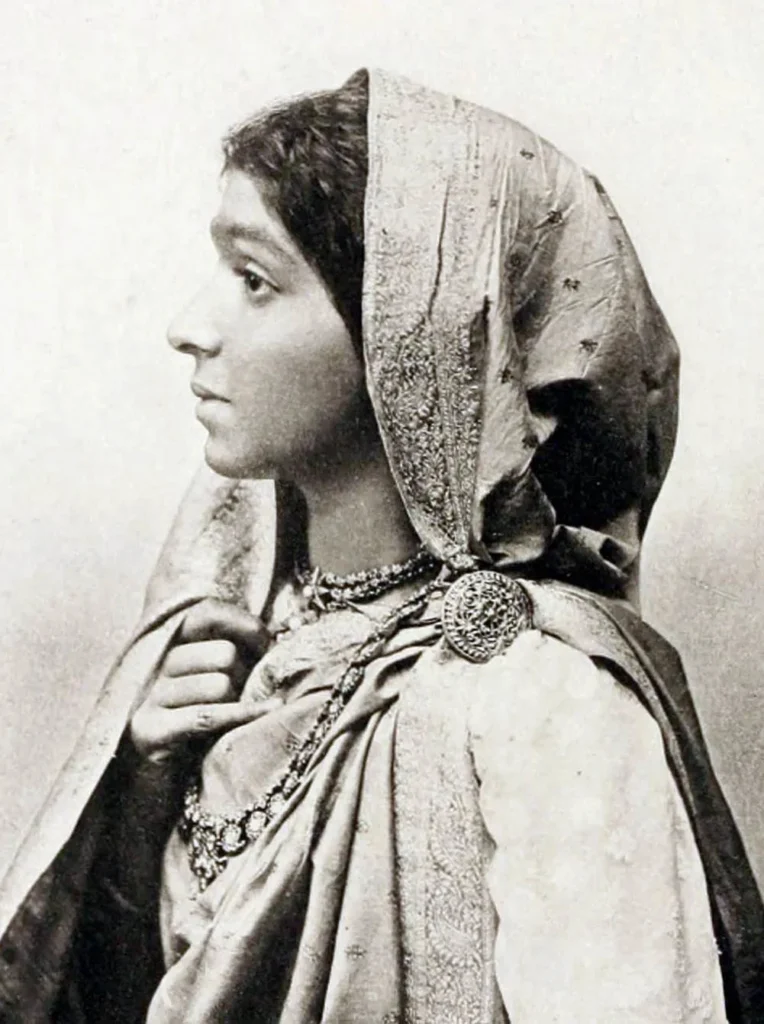
On International Women’s Day, it is worth reflecting on the intellectual contributions of Indian women writers who reshaped the landscape of modern Indian literature. Through poetry, fiction, and essays, women in Indian literature introduced new perspectives on society, identity, and cultural experience.
Literature often serves as a record of the inner life of societies. Through novels, poems, and essays, writers capture the anxieties, aspirations, and contradictions that define particular historical moments. Literary works therefore do more than narrate stories. They reveal how societies understand themselves.
Within the literary traditions of the Indian subcontinent, the emergence of Indian women writers in the modern period represents an important development. Their entry into the world of authorship expanded the perspectives through which social life could be interpreted.
For long periods, women appeared in literature primarily as characters rather than as creators. They were often represented as symbols of moral virtue, sacrifice, or familial loyalty. These representations reflected wider social expectations concerning the role of women within society.
The gradual appearance of women as authors introduced a different form of literary presence.
Women in Indian literature began to narrate their own experiences and to interpret the social environments in which they lived. Their writing did not simply add new voices to literature. It altered the perspective from which many aspects of social life were described.
The emergence of Indian women writers must also be understood within the broader intellectual transformations of the late nineteenth and early twentieth centuries. This period witnessed the expansion of education, the rise of print culture, and the growth of literary communities across the subcontinent.
These developments created new opportunities for women to participate in literary and intellectual life.
Among the early figures associated with this shift was Sarojini Naidu, whose poetry occupies an important place in modern Indian literature. Naidu wrote during a period marked by political mobilisation and cultural change.
Her poetry combined lyrical beauty with an awareness of the social and political atmosphere of her time. Through her work, literary expression remained artistically refined while also reflecting the intellectual climate of the independence movement.
Naidu’s writing demonstrated that poetry could function both as aesthetic expression and as a reflection on public life.
By the middle of the twentieth century, Indian women writers were engaging with social questions in more direct ways. One of the most influential voices in this development was Ismat Chughtai.
Chughtai’s short stories examined domestic life, gender relations, and the expectations imposed upon women within middle class society. Her writing addressed subjects that had previously remained unspoken in public discourse.
Through her work, literature became a space where everyday experiences could be examined with honesty and critical reflection.
Chughtai’s stories also demonstrated that the domestic sphere itself contained important social and cultural tensions. By exploring these tensions, she broadened the thematic possibilities of modern Urdu literature and strengthened the position of women in Indian literature.
A different but equally powerful literary engagement can be found in the work of Mahasweta Devi.
Her writing moved beyond urban middle class concerns and addressed the experiences of marginalised communities. Through fiction, reportage, and activism, Devi brought attention to the struggles of tribal populations and labouring groups who had often remained absent from literary representation.
Her work demonstrated that women writers in India could address the ethical and political questions of society while maintaining the narrative power of literature.
Literature, Memory, and Historical Experience
Another important dimension of Indian women’s writing appears in the poetry of Amrita Pritam.
Writing in the aftermath of the Partition of India, Pritam captured the emotional consequences of displacement and historical upheaval. The violence and migration associated with Partition produced profound psychological trauma across the subcontinent.
Pritam’s poetry expresses this experience with a remarkable sense of intimacy and reflection.
Her poems explore memory, loss, longing, and the search for meaning in a fractured historical moment. Through her work, the experience of Partition entered modern Indian literature not merely as historical narrative but as lived human experience.
Taken together, these writers illustrate the diversity of women’s writing in India. They wrote in different languages, belonged to distinct literary traditions, and addressed a wide range of social concerns.
Yet their work shares an important common significance.
Each of them expanded the intellectual and emotional possibilities of modern Indian literature. Through their writing, literature became a space where the voices and experiences of women could participate fully in the cultural and intellectual life of society.
Conclusion
Reflecting on Indian women writers on International Women’s Day allows us to recognise how literature has been reshaped by voices that were once marginal within the literary tradition.
The works of these writers demonstrate that literary history cannot be understood solely through the contributions of a limited set of voices. The emergence of women in Indian literature broadened the intellectual and emotional scope of literary expression.
Today, the presence of women writers in India continues to grow. Contemporary authors write within a literary landscape that was transformed by earlier generations who insisted that women’s experiences, reflections, and ideas belonged within the centre of literary culture.
The contributions of Indian women writers therefore remain essential for understanding the development of modern Indian literature and the wider intellectual history of the Indian subcontinent.